
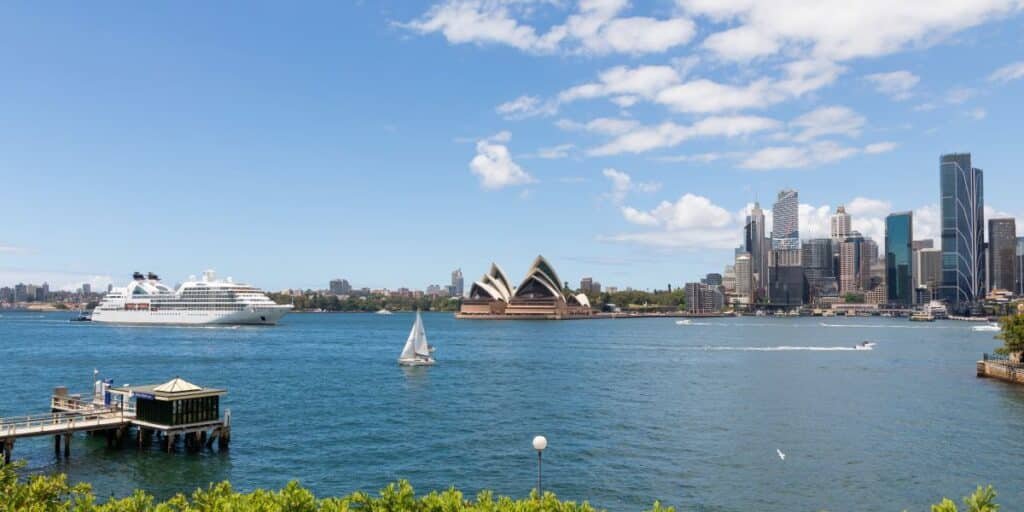
Australia’s cruise industry finds itself at the centre of two very different debates this week, with a new industry alliance launching to protect the sector’s economic future at the same time as fresh allegations emerge over the treatment of crew members working onboard cruise ships operating from Australian ports.
The contrasting developments highlight the balancing act facing the Federal Government as it considers the future of cruise policy. While tourism organisations, farmers and suppliers are urging Canberra to reduce red tape and make Australia more attractive to cruise lines, Labor Senator Tony Sheldon is calling for greater scrutiny of working conditions onboard foreign-flagged vessels.
The industry has repeatedly warned Australia risks losing ships to competing destinations if regulatory uncertainty continues, but unions and workplace advocates argue cruise companies should also face stronger accountability if they want to benefit from operating in Australian waters.
Paddock To Port Alliance Highlights Cruise’s Economic Importance
Cruise Lines International Association (CLIA) this week joined forces with farmers, tourism operators, suppliers and business groups to launch the Australian Paddock to Port Alliance, a coalition designed to showcase how much of Australia’s economy depends on cruising.
The alliance says the cruise industry contributes around A$7 billion to the Australian economy, with cruise lines spending approximately A$1.5 billion annually on local goods, services and infrastructure. Passengers contribute a further A$1.8 billion through spending on accommodation, restaurants, retail, transport and attractions before and after their cruises.
Speaking at the launch in Sydney, CLIA Managing Director Joel Katz said Australia remained one of the world’s strongest cruise markets, with more Australians cruising per capita than almost anywhere else.
“Globally, we know that cruise is growing incrementally, and here in Australia, we know that demand has reached the highest level ever, with more Australians per capita cruising than ever before,” he said.
However, Katz warned Australia was becoming a less competitive destination due to increasing costs, regulatory uncertainty and a complex operating environment. He again urged the Federal Government to complete its long-awaited review of the Coastal Trading Act, arguing cruise lines make deployment decisions years in advance and require stable policy settings before committing ships to Australia.
The new alliance also sought to demonstrate how cruise spending extends well beyond ports.
Select Fresh Providores owner Steve Biviano said a typical 10-day cruise consumes around 3,500kg of watermelons, 1,400kg of tomatoes, 4,000 litres of milk, 4,000 dozen eggs, 3,200kg of chicken and 2,000kg of beef, illustrating the demand created for Australian producers.
National Farmers’ Federation Chief Executive Michael Guerin said cruise touris

Leave a Reply