
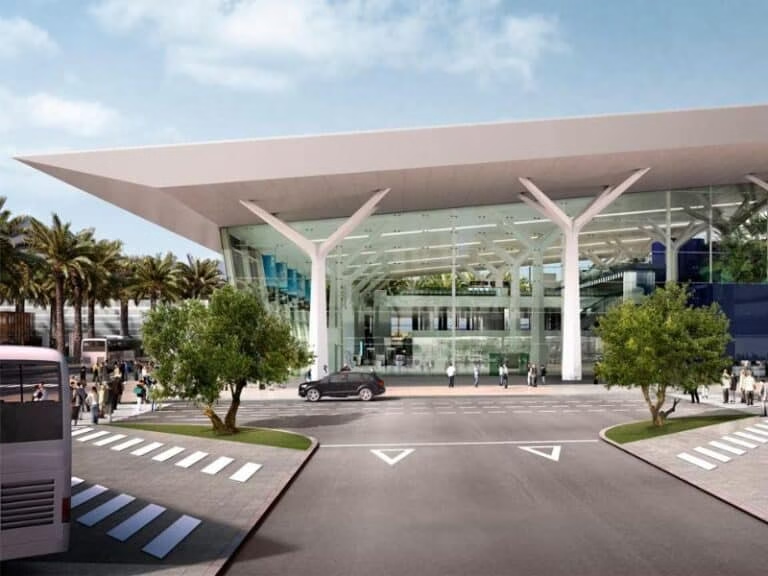
Barcelona Cruise Port has secured approval to construct a state-of-the-art Terminal C, representing a €104.5 million investment that will transform the port’s infrastructure through 2030.
The Port of Barcelona’s Board of Directors greenlit the ambitious redevelopment on 30th October 2026, extending the port operator’s contract through 2050 with an optional extension to 2053.
The approved terminal will span 11,253 square metres (approximately 121,100 square feet) at Adossat Wharf, replacing the existing Terminal C facility.
More than €50 million of the total project budget has been allocated specifically for constructing the new building, with the remainder dedicated to supporting infrastructure improvements.
Operations at the current Terminal C ceased on 1st November 2026.
The existing structure will shortly be emptied and demolished to make way for construction, marking the beginning of a multi-year transformation that will redefine Barcelona’s cruise capabilities.
Sustainability Features Take Centre Stage in Terminal Design
Environmental considerations form a cornerstone of the new terminal’s design philosophy.
The facility will incorporate solar power generation capabilities and comprehensive shore power infrastructure, allowing docked cruise vessels to connect to the local electrical grid rather than running auxiliary engines whilst in port.
This shore power provision addresses growing environmental concerns about cruise ship emissions in urban port areas.
By enabling ships to shut down their generators whilst berthed, the infrastructure will significantly reduce air pollution and noise in the surrounding areas.
The project’s environmental credentials align with broader European Union directives requiring major ports to provide shore power connections.
Barcelona’s investment positions the port competitively amongst Mediterranean cruise hubs increasingly expected to offer such facilities.
Comprehensive Port Redesign Extends Beyond Terminal Building
The Terminal C project encompasses substantial modifications to surrounding infrastructure beyond the building itself.
Plans include relocating the current Adossat Wharf access roundabout, a significant logistical undertaking that will reshape traffic flow patterns throughout the cruise port area.
New road networks will be constructed to accommodate the revised layout, improving vehicular access for coaches, taxis, and private vehicles.
A dedicated passenger walkway will be built specifically for embarking and disembarking cruise guests, separating pedestrian and vehicle traffic for enhanced safety and efficiency.
These infrastructure improvements reflect lessons learned from decades of cruise operations at Barcelona, where passenger volume growth has occasionally strained existing facilities.
The redesign prioritises passenger experience whilst maintaining operational efficiency during peak turnaround da

Leave a Reply