
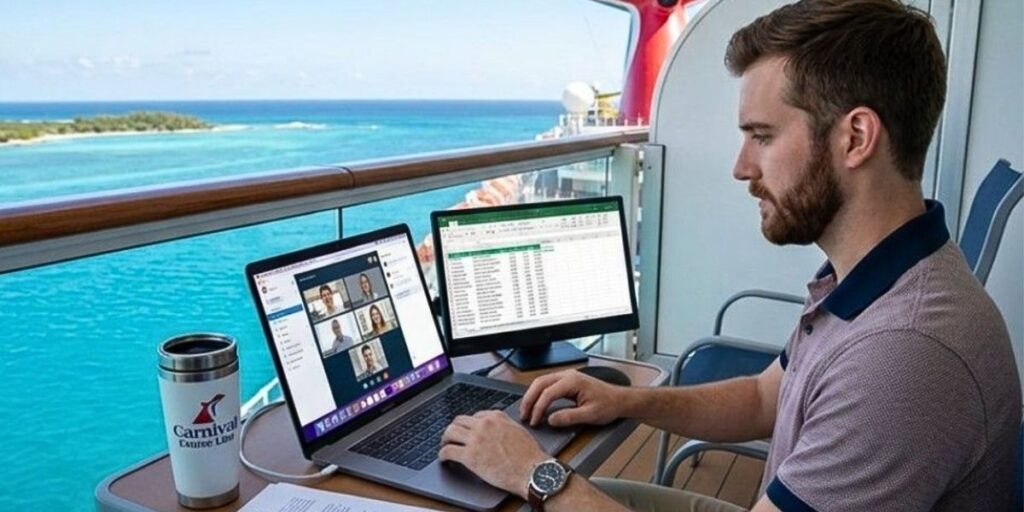
The Viral Cruise Ship Remote Work Story
Recently, a viral social media post has captured the imagination of many, claiming that a man was dismissed from his job after working remotely from a Carnival cruise ship for nine months. The tale, which has spread rapidly across platforms like Facebook and Instagram, describes a remote worker who transformed a cruise ship into his office. However, the story seems to be more fiction than fact, lacking verified details and official confirmation from the cruise line.
Unravelling the Myth
In various versions of the post, the man is named Kevin Omoregie, though other names have surfaced. He is portrayed as a data analyst who lived onboard a Carnival ship, attending meetings with an ocean view that colleagues mistook for a virtual background. Some accounts claim he worked at sea for nine months, while others extend this to over a year, with itineraries including the Bahamas, Cozumel, and Aruba. The story often concludes with his employer discovering the truth through VPN data or a shipping label listing a cruise ship deck as his address, leading to his dismissal.
Why the Story Falls Apart
Despite its initial allure, the story lacks credible evidence. No major news outlets have reported the incident, and Carnival Cruise Line has not acknowledged it. The names mentioned do not correspond to any verifiable individuals, and the details vary significantly between posts. Many versions include exaggerated or humorous elements, such as steel drum music during meetings, suggesting the story began as satire or a meme before being shared as fact.
The Reality of Remote Work at Sea
While this particular story appears fictional, the concept of working remotely from a cruise ship is becoming more feasible. Cruise lines have invested in improving onboard internet, with many ships now using Starlink technology for faster, more reliable connections. This advancement makes it increasingly possible for passengers to stay connected while at sea, although challenges remain.
Practical Considerations
Despite technological improvements, practical limitations persist. Video calls require quiet, private spaces, which are not always available onboard. Additionally, internet packages can be costly for long-term use. These factors highlight the complexities of remote work at sea, even as the idea becomes more viable.

Leave a Reply