
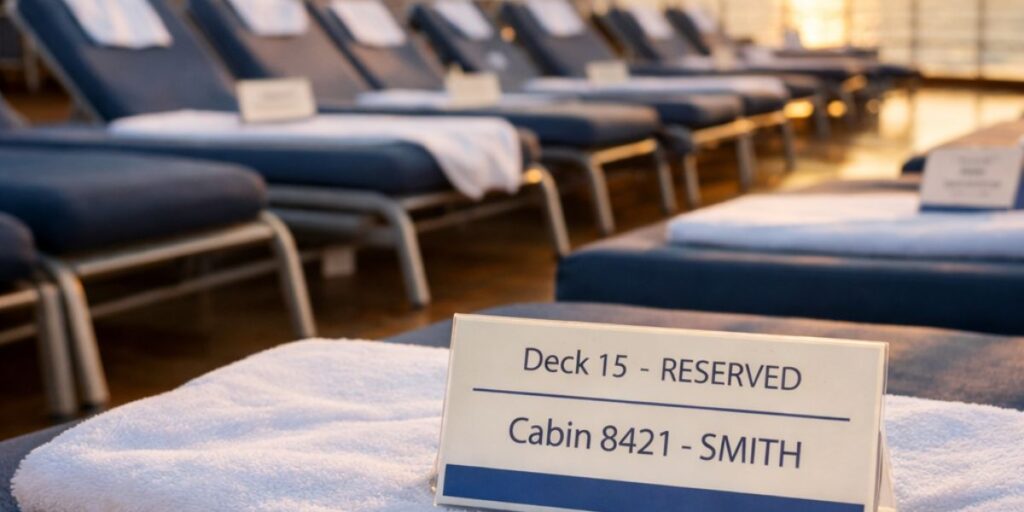
Finding a sun lounger on a bustling sea day can often feel like a game of chance. It’s not due to a lack of loungers, but rather the ones left unoccupied for hours. These loungers are often “claimed” with a towel, book, or a single flip-flop, while their owners are nowhere in sight. To address this, several major cruise lines are testing a new digital reservation system.
How the Onboard System Works
The concept is straightforward. Guests use the cruise line’s app to join a daily list for sun loungers, choosing their preferred deck or area. Around 6am each morning, allocations are released. Crew members then place name cards on assigned loungers, reserving them for guests before the pool decks become crowded. A short grace period allows guests to claim their spot, with app notifications alerting them when their lounger is ready.
Ending Towel Reservations with Trade-Offs
If you’ve ever wondered why every lounger seems “taken” yet half remain empty, you’ll understand the need for this system. Unofficial reserving has long been a frustration on cruise ships. Despite policies against it, it persists, often causing quiet tensions between guests. Currently, crew members spend time monitoring loungers and removing unattended belongings. This can lead to awkward conversations when guests confront crew about missing items. The proposed system doesn’t eliminate reservations but formalises them.
A Digital Queue with Limited Allocations
There are a few rules to this system. Guests can reserve only one lounger per person, and bookings reset daily. You can’t secure the same spot for the entire cruise. Availability is capped based on demand, especially on sea days when deck space is busiest. It’s still first come, first served, but in a more organised manner.
Not All Loungers Are Equal
One aspect that has raised eyebrows is the introduction of paid “premium” spots. These spots offer better locations or amenities, adding another layer to the reservation system. This could mean additional costs for those seeking prime lounging positions. The system may also include penalties for no-shows, ensuring guests don’t reserve loungers they won’t use.
In conclusion, while the digital reservation system aims to streamline the process, it introduces new dynamics. It seeks to end the frustration of unofficial reservations, but not without some trade-offs. As cruise lines continue to innovate, it will be interesting to see how this system evolves and whether it expands beyond loungers.

Leave a Reply